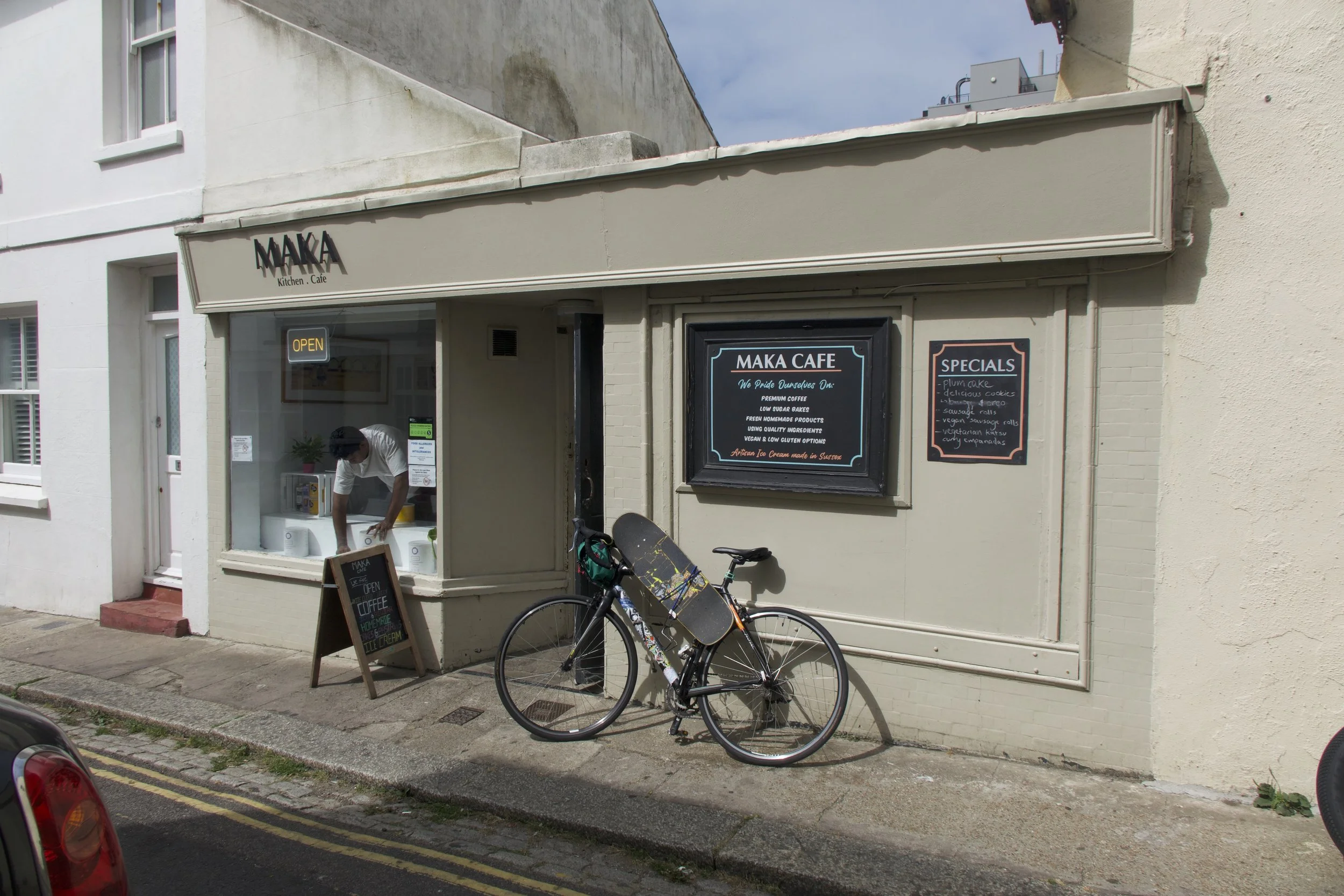
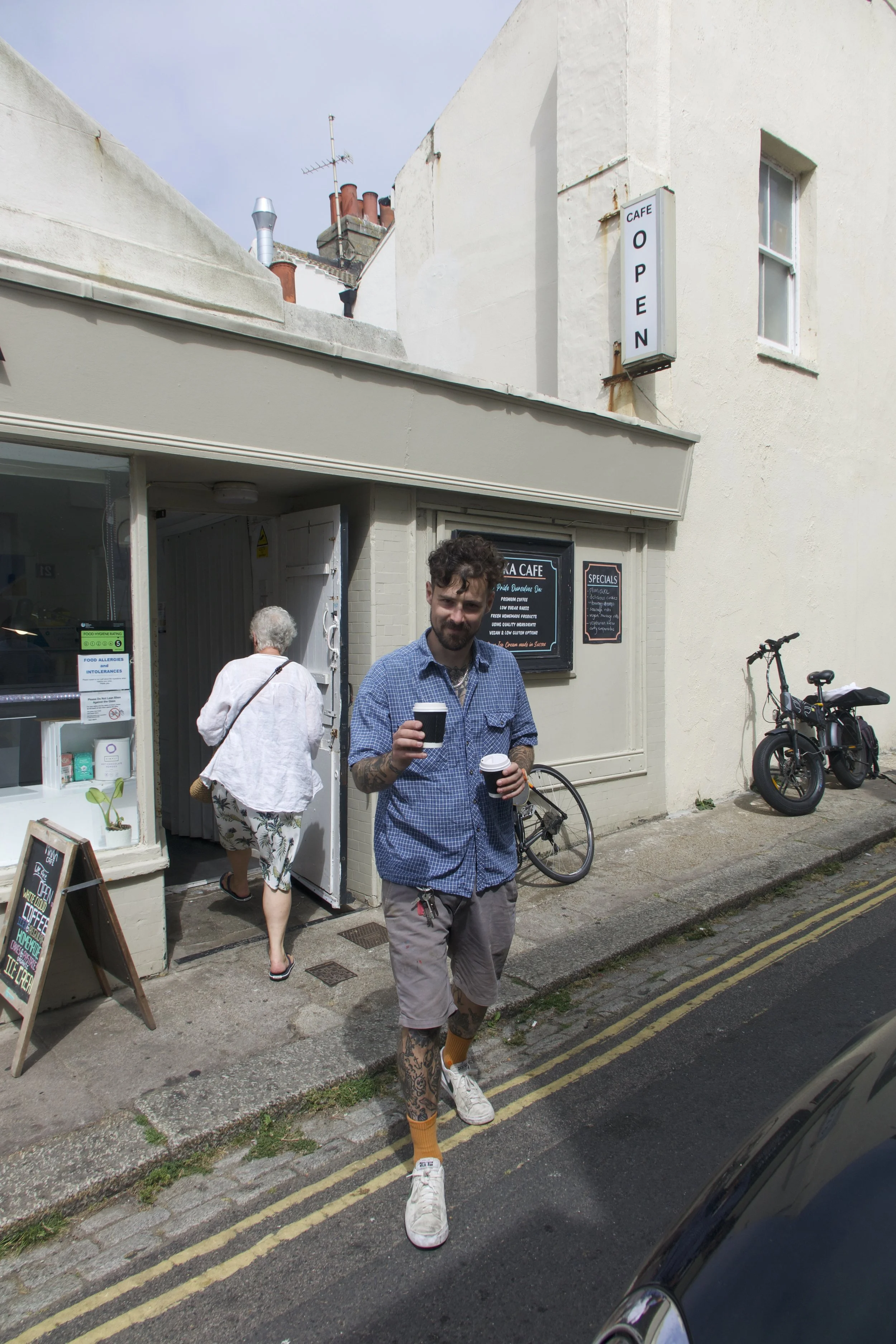
An interview with Parky
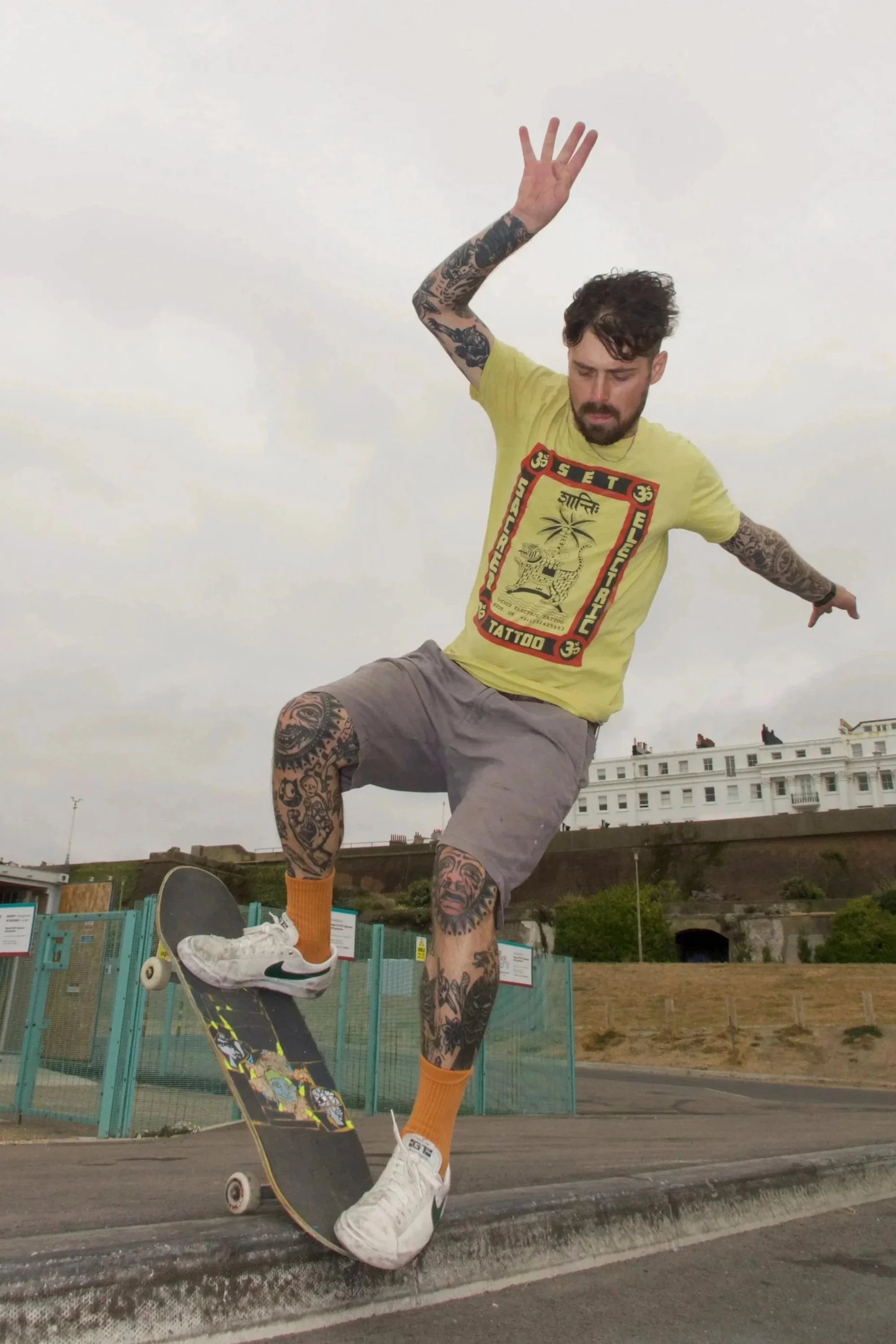
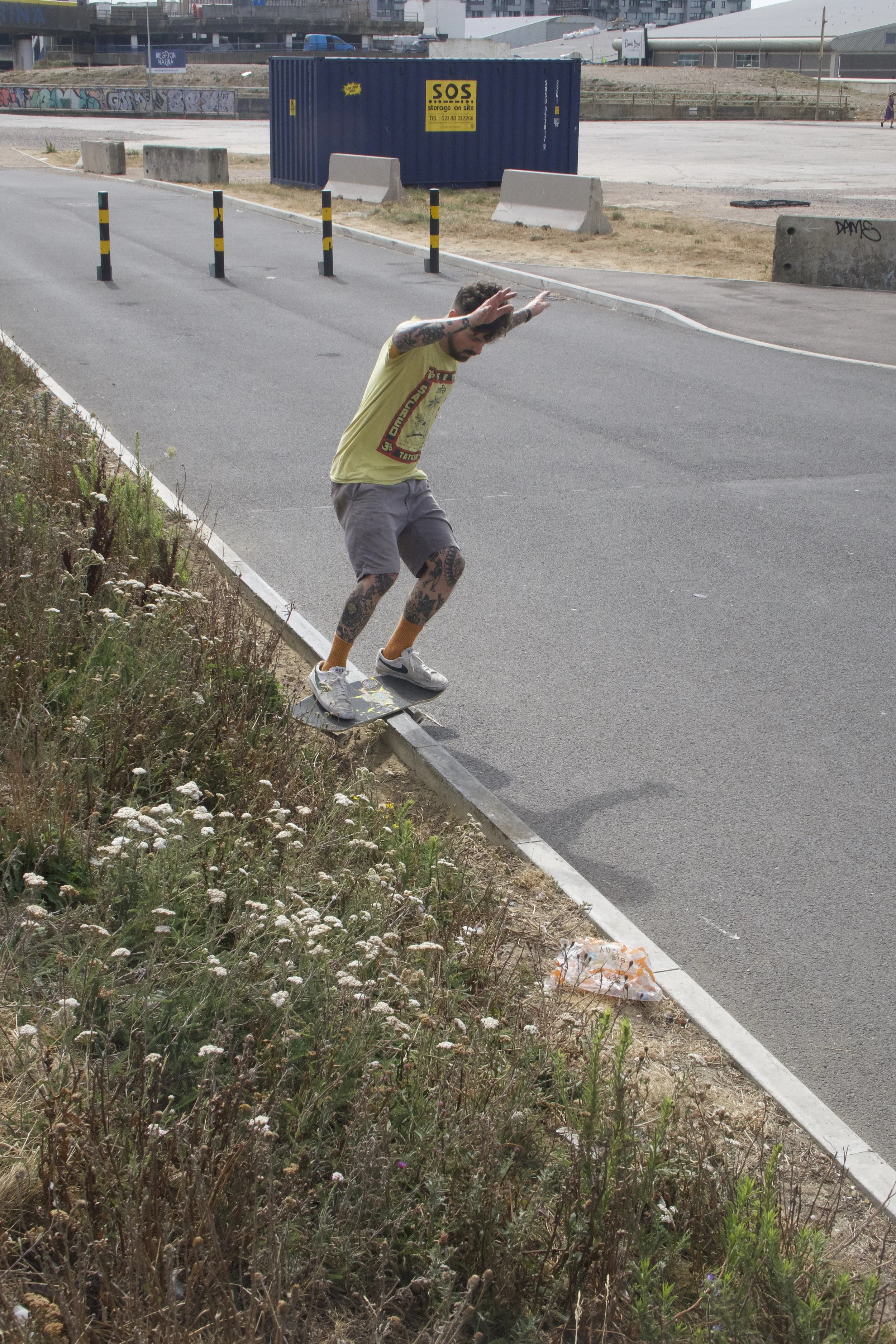
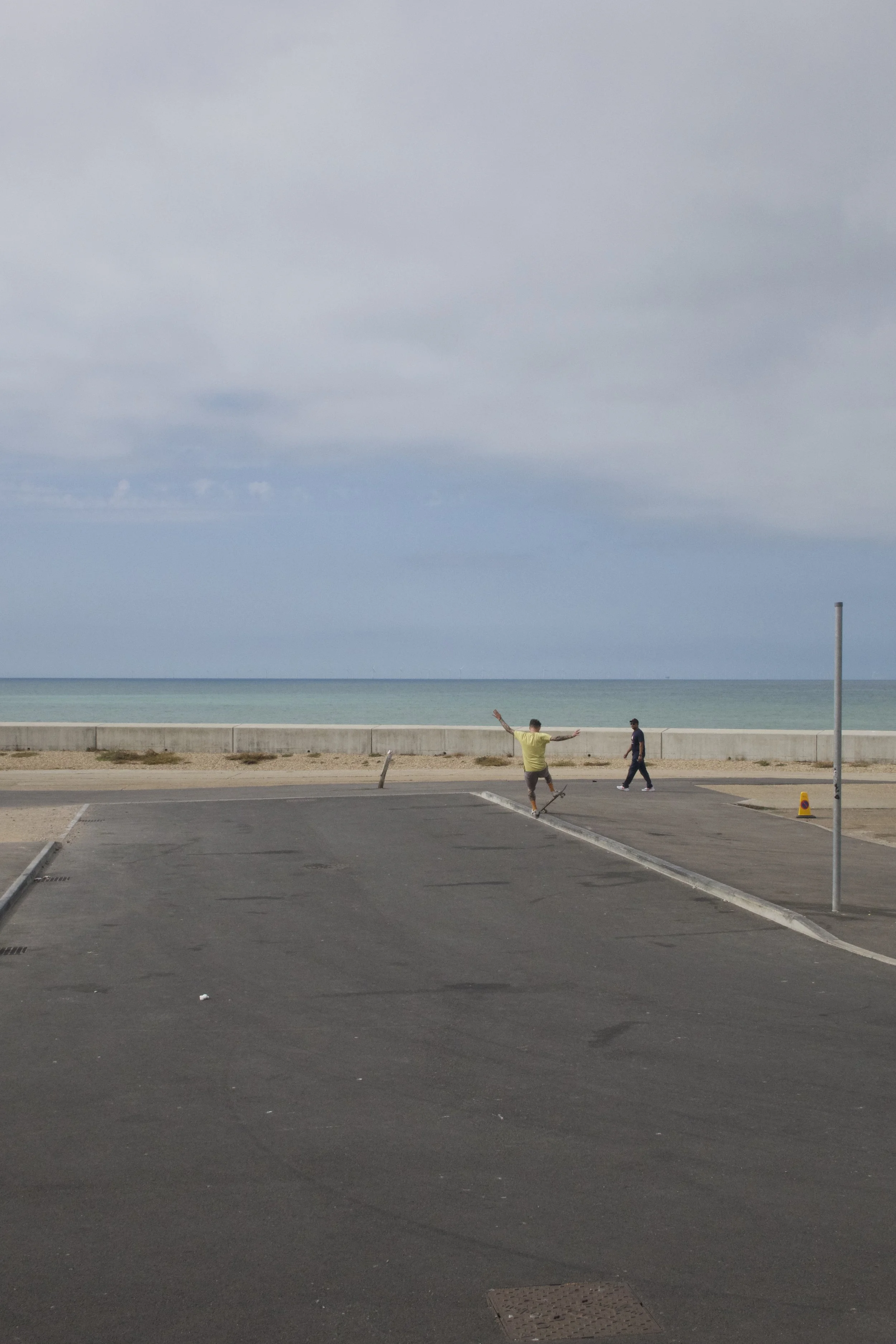
Backside Slappy Blunt
Hey Parky, how's it going?
Pretty good.
Tell us where you're from.
Well, I was born in Aylesbury, but moved to Devon when I was three. Just outside Exeter, kind of between Exeter and Plymouth, in a little town called Chudleigh.
What was it like growing up in Chudleigh?
Pretty dead. There weren't very many buses, so you kind of relied on friends driving. It was a sleepy little town. Pretty boring.
Was that where you first started skating?
Yeah, man. I liked BMX for a tiny bit first, but then, for my tenth birthday, I got a skateboard from Boarding House, the local shop in Exeter. It was a BMX and skate shop, and the team there were really rad. I just fell in love with it.
I did have a shitty skateboard before that—a little Star Wars one that I got when I was maybe six or seven—but I don't really count that. I consider starting skating when I got my first proper board with metal trucks.
Did you have any local skateparks?
The main go-to was Flowerpot, built by Tim Ruck, the same guy who ran the skate shop. It was all pretty skateable. It had a cool little street section with some good ledges, and it was built on a tarmac base. It was really fun.
Occasionally we'd go to Plymouth, or down to Mount Hawke, to the massive indoor park. There were loads of shitty prefab parks around as well. There weren't really many concrete parks when I first started. We skated little bits of street too. Plymouth was definitely way better than Exeter.
I was lucky though. My dad built me a mini ramp in the garden.
That's the childhood dream.
Yeah, living the dream.
It was almost more like a flat bank—the dimensions were pretty bad. Later on I built a little hip onto it and got the dimensions a bit better. I was definitely thankful for it though. It gave me somewhere to skate whenever I wanted.
Apart from that we'd skate these shitty curbs outside the Co-op in town that wouldn't really grind.
At what point did you end up coming to Brighton? What brought you here?
I moved here when I was 19, in 2011, to study Illustration at uni. It was a really cool course and I really enjoyed it. It was nice to leave Devon.
The other option was Bristol, but it felt like too much of a party scene. I already had my mate Pat here, who I'd grown up skating with since I was about 14 or 15. Through him I already knew people like Stevie, Rich West, Louis, Rupert and Sirus, so moving here felt like a really easy transition.
The Brighton skate scene was sick. I used to skate the West Pier all the time when it was really popping. It was still the old wooden level. I remember seeing Harrison there when he was just a tiny kid skating in ankle-swinger trousers. It's funny seeing the flip side now with everyone wearing baggy trousers. He was always sick.
Brighton definitely feels like home now.
You mentioned skating the West Pier when you first moved here. What was that like?
West Pier was really cool. I arrived when people were renting the lockers underneath so they could pull out ramps, kickers and boxes so everyone could build different lines. It became somewhere people would hang out as much as skate. It was never massively busy, but it always had a good atmosphere, and you just made the most of what was there.
This was before the i360 and everything. It's a bit of a shame now because it feels a lot more uninviting. There are still a few nice benches, but it doesn't really feel like they want you skating there anymore.
I loved the old Hove Lagoon too. It was really simple, but it worked. You could just skate laps all day. Shoreham was still fairly new as well.
Brighton's always had a really good scene, but everyone had their own little pockets. Some people skated The Level, others skated West Pier.
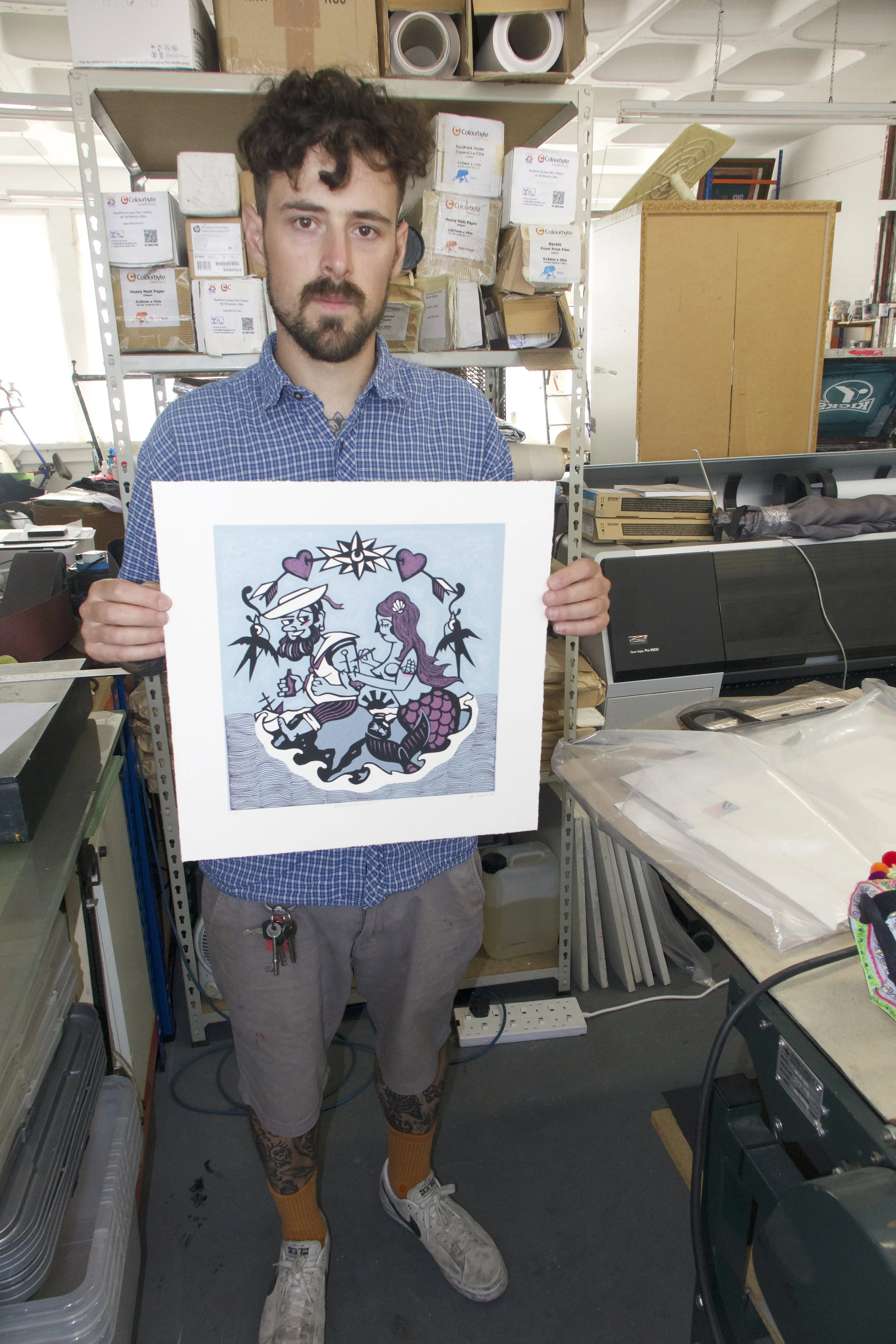
You mentioned that you came here to study Illustration. Can you tell us a bit more about your work as a tattoo artist and printmaker?
Yeah, loads of it kind of stems from skating. I've always drawn, like, forever. When I was a kid I'd always draw Beast Wars—they were like Transformers but animals—and Pokémon was fucking huge as well, so I'd draw my own versions of those.
Then skating came along. Going into the skate shop and seeing all the board graphics, I just thought, oh man, these are really cool. They felt really different, and through skating and gripping boards and stuff it became a huge influence on the way I made work.
I started cutting stencils after watching a Firm video where Lance Mountain was making them in one of the skits. I thought it looked really fun. That kind of led into painting cartoon characters, messing around with graffiti and then into screen printing. If you're making skate stuff, you want to make T-shirts, stickers and graphics, so screen printing just felt like a natural extension of that.
Tim, who ran Boarding House in Exeter, had a screen-printing carousel in the basement of the shop, so I'd always had it in the back of my mind that I wanted to learn. Then, when I was a kid, there was a Sidewalk competition to get your design printed by Stu at LovenSkate. I didn't win, but Stu liked my drawings and invited me up to his print studio in Bethnal Green. Seeing his setup, and all the prints by different artists, was a real eye-opener. That was the point where I thought, yeah, this is something I really want to do.
Later, when I did my Art Foundation—which I'd recommend to anyone who's creative—I gravitated straight towards the print room. It just made sense. If you've spent years cutting stencils for grip tape, screen printing feels like a natural progression.
What I really like about printmaking is making multiples. There's something almost socialist about it. It's about making artwork accessible. Not everyone can afford a painting, but loads of people can buy a sticker or a T-shirt. I like that idea of making things that people can actually own, rather than just making expensive one-off pieces.
Going into that skate shop in Exeter was the first eye-opener. Stu's studio was another. Then when I moved to Brighton I ended up living with someone who cleaned at Into You Tattoo. Back in Devon I hadn't really seen many tattoo studios that inspired me—they all felt a bit cheesy—but Into You was different. I'd wander around the studio after hours and realised there was a real connection between tattooing, skateboard graphics and printmaking.
One of the founders, Alex, was a printmaker as well, so suddenly it all kind of clicked. Looking through the portfolios there was probably the moment I realised tattooing was something I really wanted to pursue.
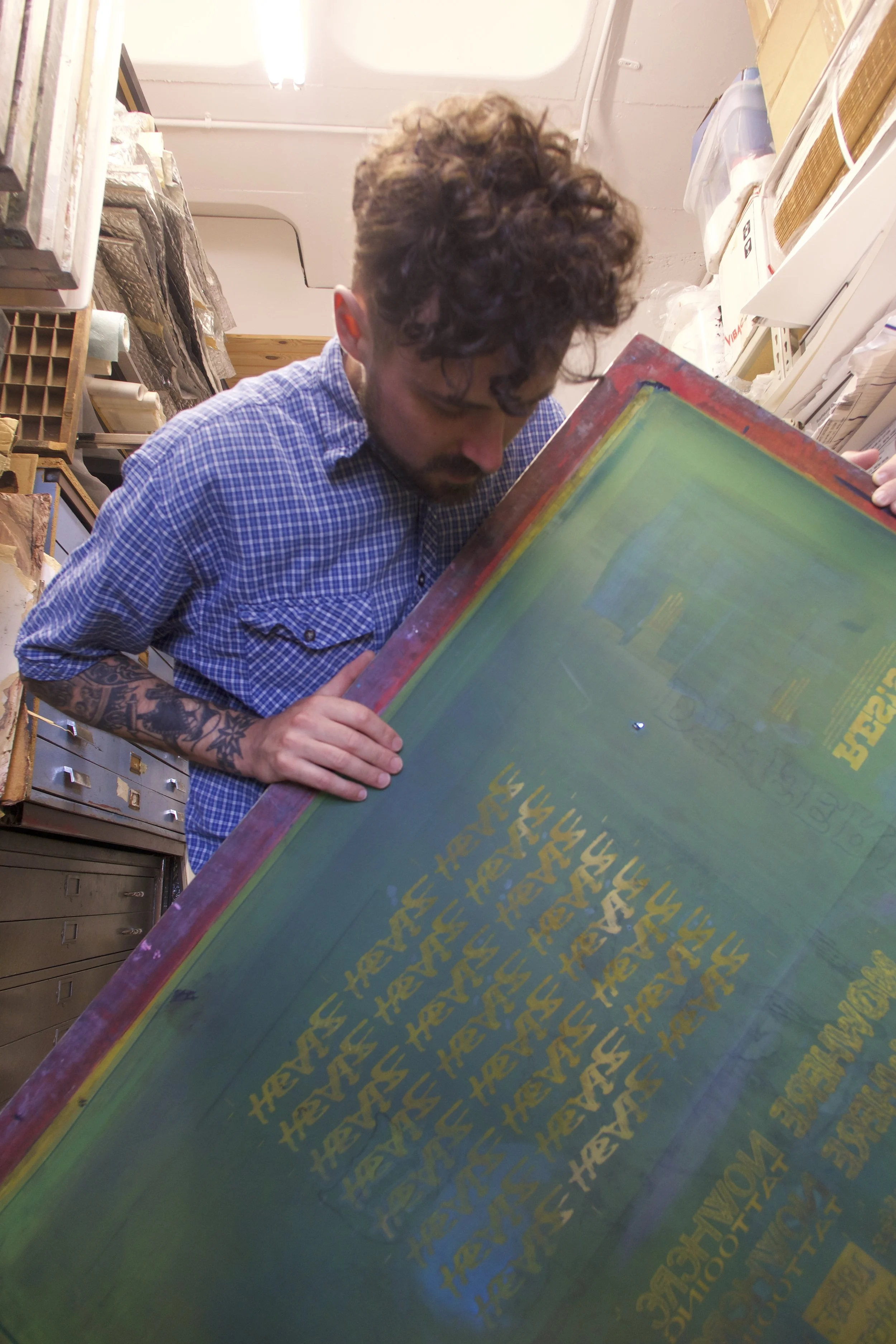
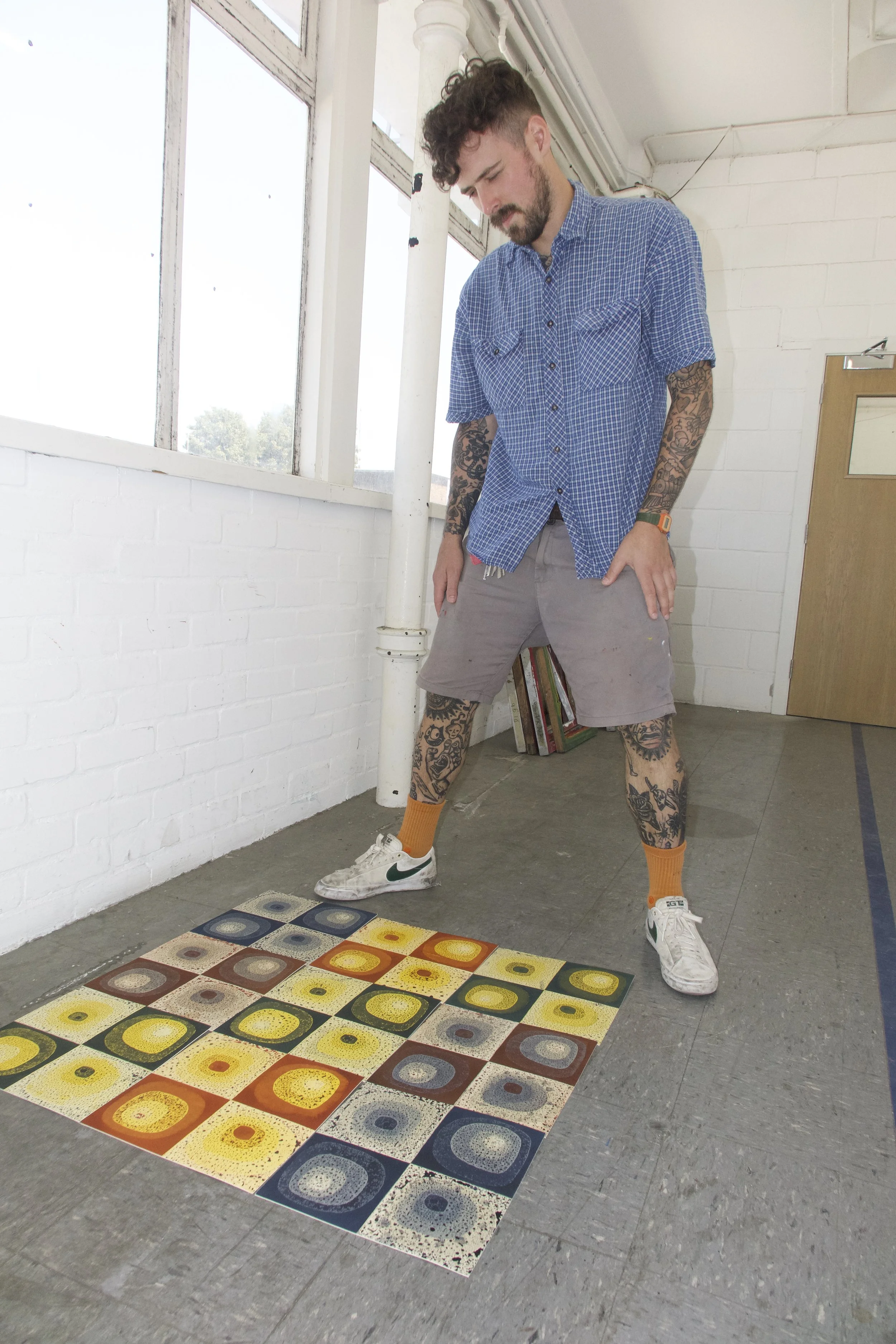
On the subject of the screen printing, you were involved in the last board graphic. Do you want to talk us through the graphic and how that came about?
Yeah. It's a Brighton company, so I wanted it to feel really Brighton. The town crest has those two medieval fish-style dolphins on it. I don't know if that's just what people thought dolphins looked like back then, but you see them on the lampposts all over town.
I spotted this really gnarly one in a mosaic at the Town Hall and thought, man, that'd make such a cool graphic. Mine ended up a bit less gnarly, but that was where it came from.
Everything was cut by hand out of paper. That goes right back to cutting stencils for grip tape with a scalpel. I like stepping away from computers where I can, and cutting everything by hand meant we could expose the screens directly. I even used Amberlith for one of the layers, which is a nice nod to the old skate artists like Jim Phillips, who used it before digital separations were a thing.
So you cut the whole graphic by hand rather than printing it out?
Yeah, everything was done by hand.
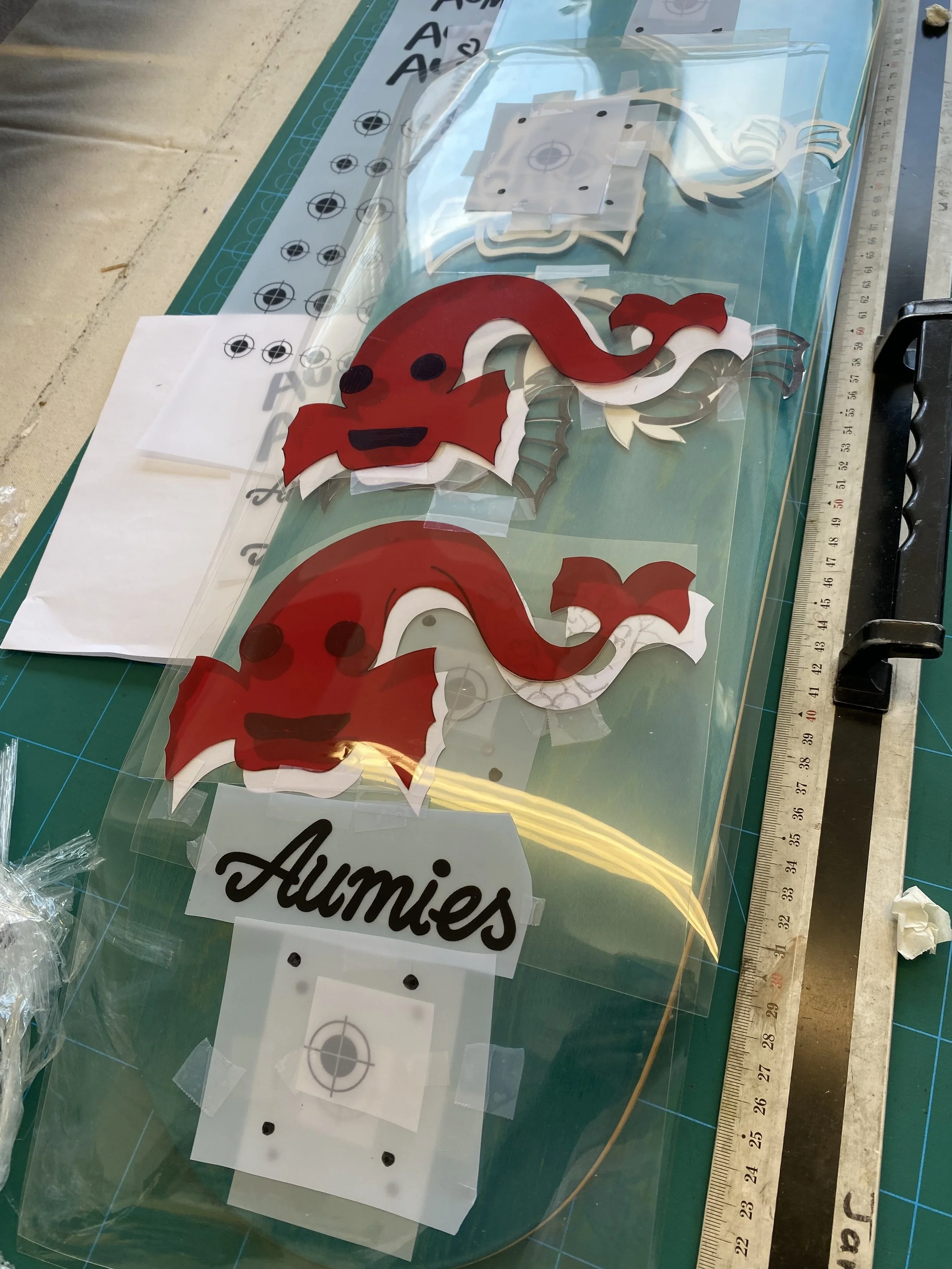
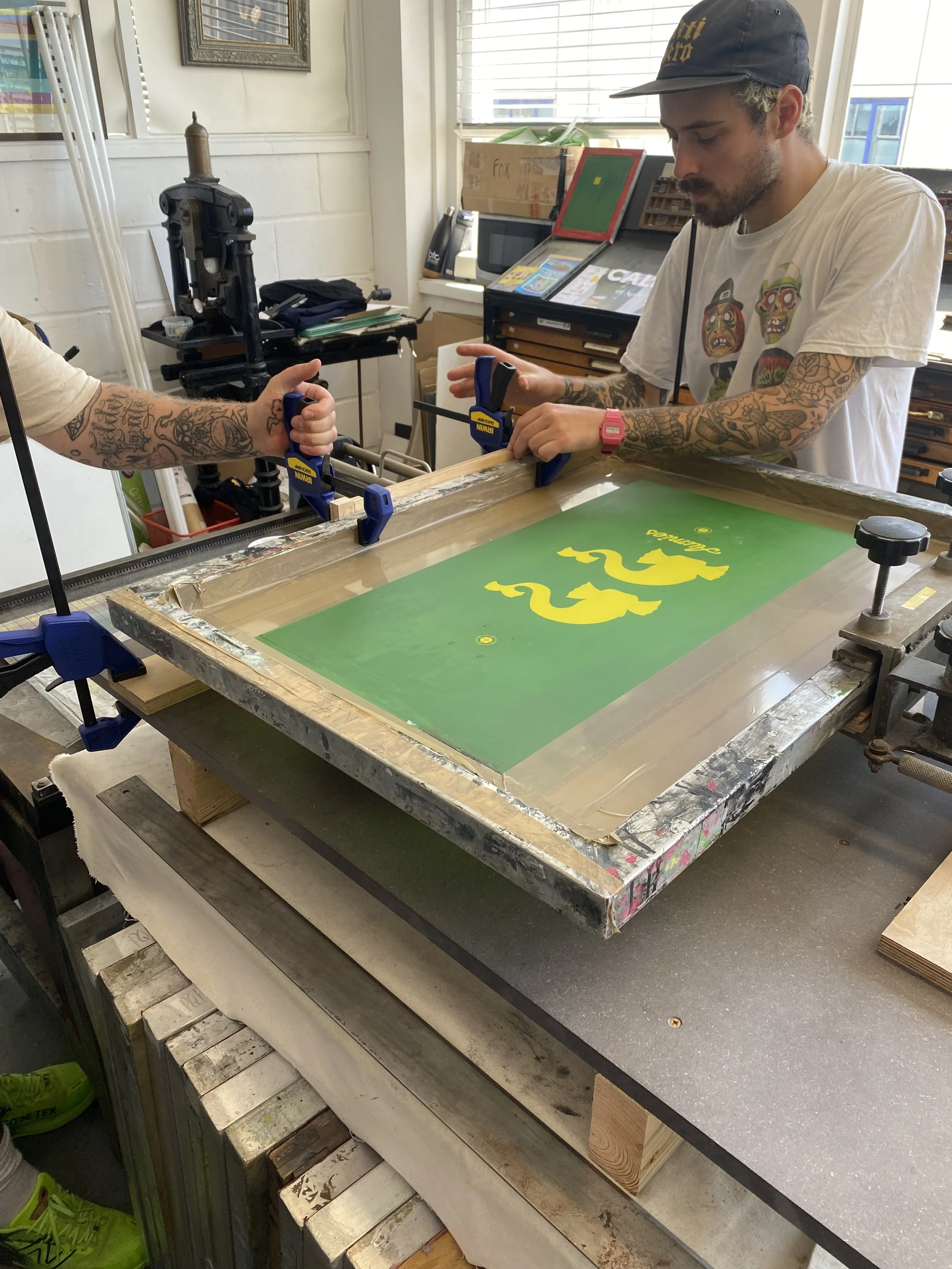
One step further?
One step behind. Laughs.
It was a lot of trial and error. Massive shout-out to James "Horse" Hall, who gave me the jig they used for printing boards. He used to work with Stu at LovenSkate, so it felt like a nice bit of knowledge being passed down.
Andy helped loads with building and troubleshooting the setup, and Josh Lock from Slap N Slide's been helping us refine it too. There's loads of little challenges—different wheelbases, screens drying out, registration—but that's part of the fun.
It was definitely stressful printing on expensive board blanks, especially on one of the hottest days of the year, but I love that DIY side of it. For a first proper go, I think it worked really well, and hopefully we'll keep refining it and do plenty more.
Where can people find your work?
Yeah, I'm mainly on Instagram as @parkydoodles, but I've also just made a website called JD Parkinson Art. I'm trying to do things a bit slower, really. I think making reels and doing all the stuff social media asks of you can kind of detract from actually making things. The website lets me show my process a bit more, write about what I'm exploring and why I'm making things, rather than just posting finished work.
Any closing words?
I think looking at skaters and the attitude that skaters have is really interesting. Some people find things really easy and some people don't, but I think everyone who's stuck with skating has that willingness to keep trying. You slam loads of times, you keep failing, but you still want to get back up and have another go. That's such a good lesson, not just for skating but for making art, or really anything. You've got to be hungry enough to keep going, even when it doesn't seem like you're getting anywhere.
It's also about play. Whether it's a skateboard, a piece of paper or even cooking, messing about and trying things without being afraid to fail is really important. I think that's where a lot of the good stuff comes from.
And don't be afraid to have heroes. Choose people whose work genuinely excites you and be inspired by them. I don't think there's anything wrong with emulating people, because naturally you're never going to do it exactly the same anyway. Your own way of thinking and making always comes through. I always try to share my process because giving someone the ingredients doesn't mean they'll make the same thing.
So I'd say pursue the things you genuinely enjoy. Don't just chase whatever's trendy because there's only so much longevity in that. Do things with honesty and intention because you love them. Play to your strengths, stay curious and don't take things too seriously.
I mean, there'll always be times when you're trying a trick and you're thinking, I'm really not enjoying this right now. But when you finally get it, that's what makes it worthwhile. It's the same with making artwork. A lot of it is just the process, and if you can stay stoked on the process, you're probably doing alright!