
Skateboarding Over 30: Why It's Never Too Late
There can be a misconception that skateboarding has an expiry date. That once you hit 30 you should give up on skateboarding, it’s time to grow-up and start acting more like an adult …
Well we’re here to say bollocks to that!
Steve Caballero is 60 and still skating for Powell-Peralta. The same company that sponsored him in 1979. Josh Kalis at age 49 still maintains his signature Tre Flip and Chris Pulman at 50 can still be found at Hove lagoon skatepark doing the cleanest no-complies! Tony Hawk only retired the indy 540 this year at 57 (which is insane!) and even that was more about picking his moments than giving up entirely. These aren't exceptions. They're proof that the idea of being "too old" is something society made up.
But this isn't really about the pros. It's about the rest of us. The ones who skated as teenagers, drifted away when life got complicated, and now feel that pull again. Or the ones who never skated at all but feel a calling to give it a go!
Studies on skateboarding
Dr Paul O'Connor at the University of Exeter ran a proper study on middle-aged skateboarders in the UK and Hong Kong. He interviewed 30 skaters over 40 and found something that anyone who's been in a session already knows: skateboarding isn't about staying fit. The physical stuff is almost a side effect.
What he found was that skating gives older riders something hard to find elsewhere. An identity outside of work and family. A community that doesn't care about your job title. A way to deal with the shit that life throws at you.
One of the skaters in the study, a 45-year-old artist with clinical depression, described skating as "a big tool for mental health." Another, 37, said skateboarding was "pretty much everything" and that it had stopped him from doing "stupid things" in his life. When O'Connor asked some of these guys what skating meant to them, he was met with grown men fighting back tears. Lost for words.
Skateboard GB and Flo Skatepark ran their own study and found the same thing. Skating reduces stress, builds confidence, and provides genuine escapism. Nottingham Trent University looked specifically at women getting into skating later in life and found it led to better mental health and improved body self-compassion.
Why skating hits different when you're older
When you get older your perspective shifts. You care less about what people think and start skating because it genuinely makes you feel good. The pressure to progress at a certain pace disappears. You're not trying to go pro anymore or compare yourself to others. You're just trying to roll - and even making it to the skatepark when you’ve got 101 things going on is a miracle in itself!
And that's when skating becomes something else entirely.
There's a reason so many people describe skating as meditative. When you're focused on a line or working on a trick, everything else falls away. Your work stress, your responsibilities, that email you need to reply to. None of it exists. It's just you, the board and immediate surroundings!
The other thing that changes is how you see failure. In most parts of adult life, failing at something feels serious. At work, in relationships, in whatever you're supposed to be achieving by now. But in skating, failure is built in. You're going to fall. You're going to mess up the same trick fifty times before you land it. And that's completely normal.
That mindset of seeing failure as progress rather than defeat is genuinely useful beyond the park. O'Connor's research specifically highlighted this as one of the reasons skating helps middle-aged people cope with depression.
The practicals
Here's some stuff to take into consideration
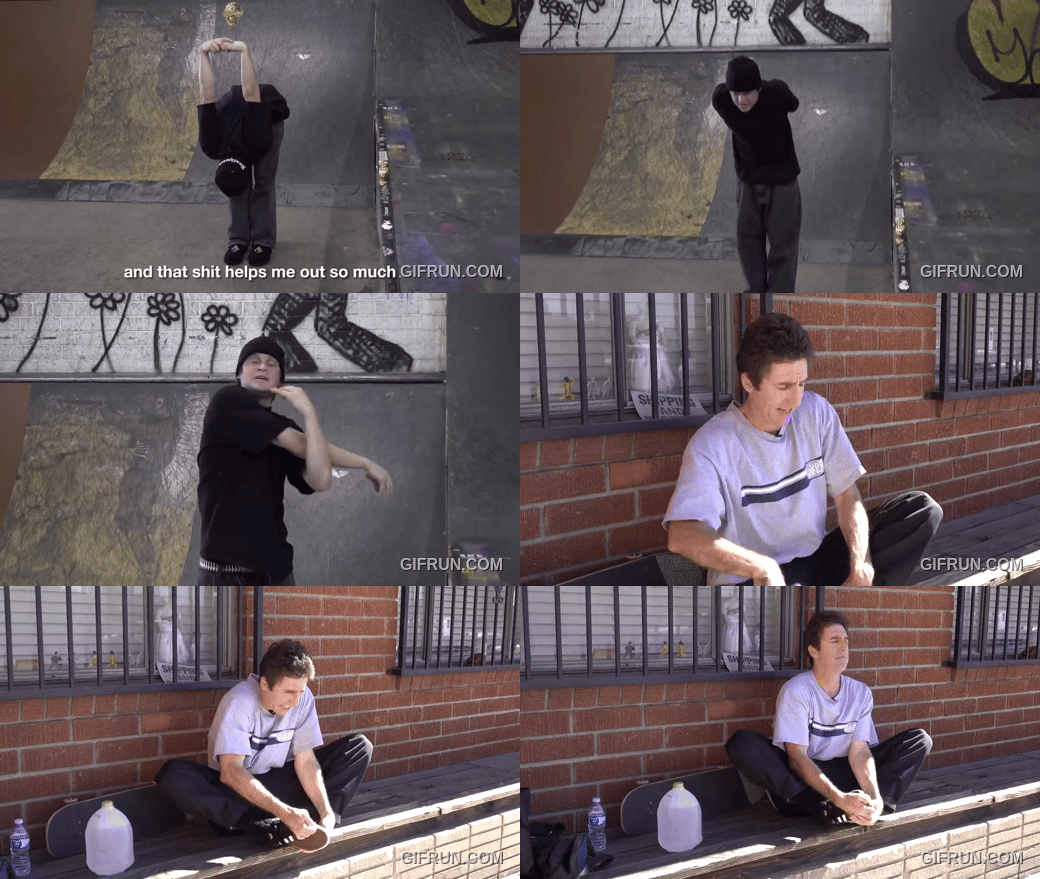
Your body isn't 16 anymore. This isn't pessimism, it's just reality. It’s important to warm up and stretch before the sesh. Five minutes of moving around and stretching before you start pushing makes a massive difference to how you feel on the board and the next day. Your knees, ankles, and back will thank you for it.
Recovery takes longer. The slam that would have had you back on the board in 30 seconds when you were a teenager now requires a sit down and possibly a day off. Accept this. Work with it. If you need to wear pads, feel free, no one will judge and if they do they’re not worth your time anyway!
Start where you are, not where you were. If you skated in the 90s and you're just getting back into it, it’s most likely you’re not going to pick up from where you left off. That kickflip you used to have locked-in may well be lost but the good news is it comes back faster than you'd expect, but only if you don't try to skip the basics. Spend some time pushing, cruising, carving and getting comfortable on the board again.
Your setup matters more now. Small hard wheels might have been the norm when you were young, invincible and trying new tricks, but if you’re just getting back into it maybe you just want to cruise, so slightly softer, larger wheels, may be the way to go if you're less concerned about flips and technical tricks. Consider a slightly wider deck too, it feels great and offers more stability especially on transition.
Find your local scene. One of the best things about skateboarding is the community and the sheer mix of people from different backgrounds and demographics. If you're local to Brighton, skateparks like the Level or Hove Beach Plaza have solid morning crews where the vibe is mellow and the locals are welcoming. That sense of community and the sharing of this one passion is part of what makes this work. It’s always worth reaching-out to your local skateshop to get local knowledge on spots and meet new people!
The people who prove it's possible
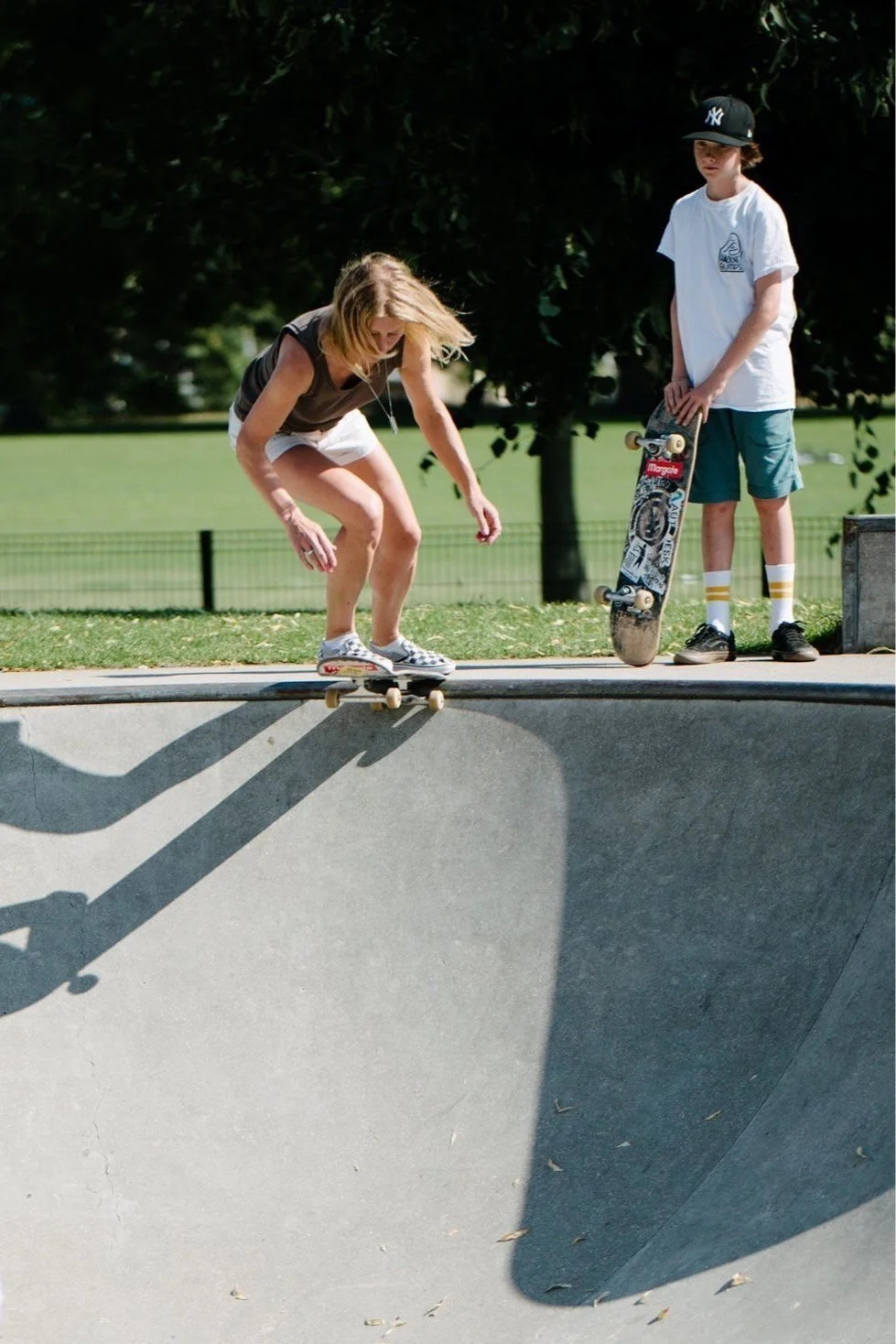
Every park has them now. The dad who got back into skating because his kid wanted to learn and now he's more hooked than his son. The mum who picked up a board at 47 because she was bored at home. The former vert rat who hadn't touched a board in decades and now rolls through every Sunday morning.
Esther Sayers started skating at 47. She's now in her early 50s and talked about how adult life had started to feel "constricting." The job, the house, the endless responsibilities. Skating gave her a new challenge, a new identity, something to learn again.
Loads of people come back to skating through their kids. That's proper bonding. Not sitting on the sideline watching them at football practice, but actually doing something together. Learning together. Stacking it together and getting back up.
What about injuries?
Whilst skateboarding doesn’t come without some scrapes most of injuries come from people going too hard too fast. Trying tricks they're not ready for. Not wearing protection, or not learning to fall properly. Basically, skating like they're still teenagers when they're not.
It’s important to skate within your limits. Wear a lid if needed, remember there's no shame in protection.
Working on your strength off the board can help too. Core strength helps everything. Your balance gets better, you can absorb impacts easier and you recover faster. Even basic stuff like walking, stretching, and not sitting at a desk for 12 hours a day can make a difference.
The old & new
Skating has always been intergenerational. That's one of the things that makes it different from other activities. You don't get 50-year-olds playing in the same Sunday football league as teenagers. But at the park, it happens every day.
Older skaters bring knowledge, history and perspective to the scene. They remember when there were no parks, when you had to build your own ramps, when skating was genuinely underground. That continuity matters.
And the younger riders? They don't seem to mind. Most of them are stoked to see older people rolling. It breaks down the idea that skating is a phase you grow out of.
The bottom line
If you've been thinking about skating but keep telling yourself you're too old, here's the reality: 30 is not old. 40 is not old. 50 is not old. The only thing that makes you too old for skating is deciding you're too old.
The research backs it up. The community welcomes it. The legends of the sport are still doing it into their 60s.
So get a board, find your scene and start pushing.
It doesn't matter if you're rusty, if you've never skated before, if you feel self-conscious, if you're worried about falling. Everyone falls. Everyone was a beginner once. And the feeling when you land something, whether it's your first ollie or just a clean line through the park, that feeling doesn't change with age. It's still the best thing in the world!